Understanding PCOS: Symptoms, Causes and Treatment
Gynecology
Chaitanya Hospital Medical Team
8 min read
Polycystic Ovary Syndrome (PCOS) is one of the most common hormonal conditions affecting women of reproductive age, yet it remains widely misunderstood. Many women live with its symptoms for years — irregular periods, unexplained weight gain, acne — without realizing they're connected, simply because PCOS doesn't always announce itself clearly.
This guide explains what PCOS actually is, why it happens, how it's diagnosed, and what real treatment looks like.
What Is PCOS?
PCOS is a hormonal disorder in which the ovaries produce higher-than-typical levels of androgens (male hormones that are normally present in small amounts in women). This hormonal imbalance can interfere with ovulation, leading to irregular or absent periods, and can contribute to the development of small fluid-filled sacs (follicles) on the ovaries.
Despite the name, not every woman with PCOS actually has cysts on her ovaries — the diagnosis is based on a broader combination of symptoms and test results, not ovarian appearance alone.
Common Symptoms of PCOS
Symptoms vary widely between women, which is part of why PCOS is often under-diagnosed or diagnosed late.
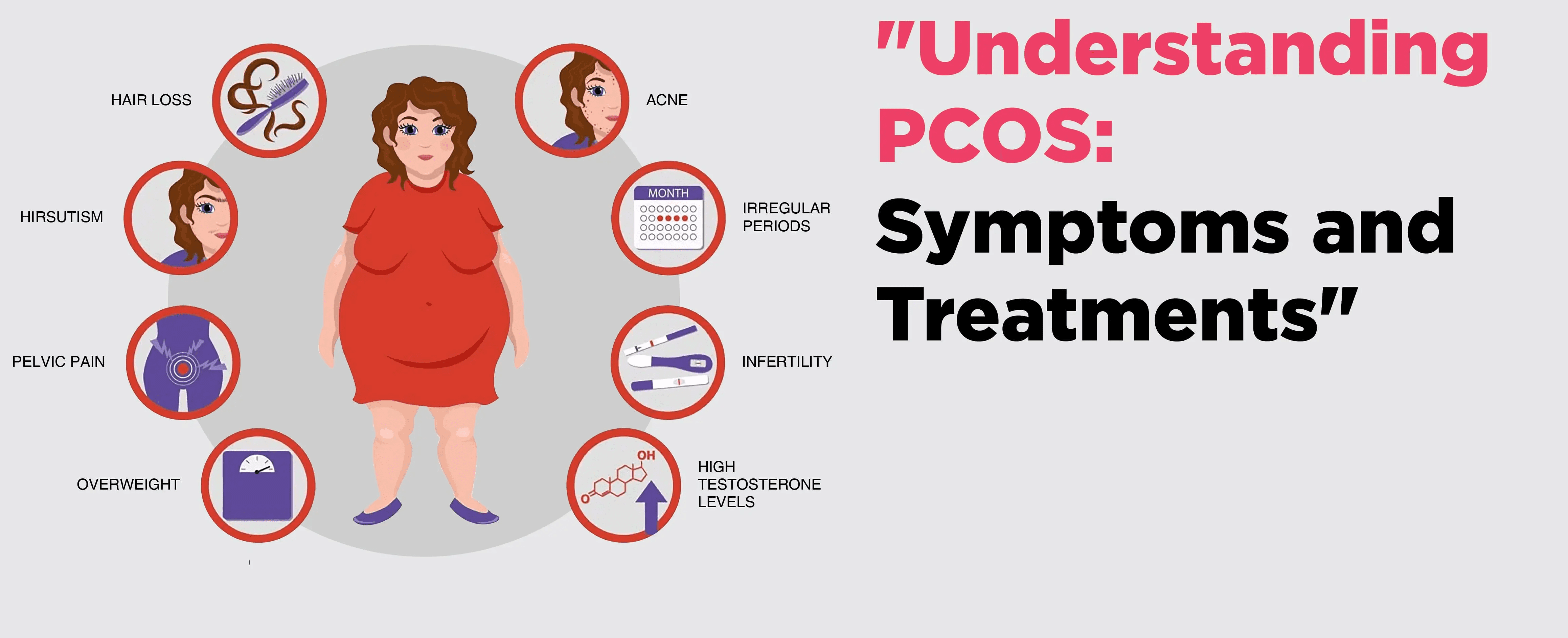
Irregular or absent periods — often the first noticeable sign
Excess hair growth on the face, chest, or back (hirsutism)
Persistent acne, particularly along the jawline
Thinning hair on the scalp
Weight gain, particularly around the abdomen, or difficulty losing weight
Darkened patches of skin, often around the neck or underarms
Difficulty conceiving, due to irregular or absent ovulation
Not every woman experiences all of these symptoms — some may have very mild signs, while others experience several simultaneously.
What Causes PCOS?
The exact cause of PCOS isn't fully understood, but several contributing factors are well recognized:
Insulin resistance — many women with PCOS have cells that don't respond well to insulin, prompting the body to produce more of it, which in turn can increase androgen production
Genetics — PCOS often runs in families, suggesting a hereditary component
Chronic low-grade inflammation — linked to higher androgen production in some studies
Hormonal imbalance — including elevated luteinizing hormone (LH) relative to follicle-stimulating hormone (FSH)
How Is PCOS Diagnosed?
There's no single test for PCOS. Diagnosis is typically based on a combination of:
Symptom history — menstrual irregularity, hair growth patterns, acne, and weight changes
Blood tests — checking androgen levels, insulin resistance markers, and ruling out thyroid disorders that can mimic PCOS symptoms
Ultrasound — to examine the ovaries for characteristic follicle patterns
Doctors typically use established diagnostic criteria requiring at least two of the following three: irregular ovulation, clinical or biochemical signs of excess androgens, and polycystic ovaries on ultrasound.
Treatment Options for PCOS
Treatment is highly individualized and depends on your symptoms, whether you're trying to conceive, and your overall health goals.
Lifestyle Management
Balanced nutrition focused on stable blood sugar, with attention to fiber and protein intake
Regular physical activity, which can improve insulin sensitivity and support weight management
Even a modest reduction in body weight (5–10%) can meaningfully improve symptoms for many women
Medical Management
Hormonal birth control to regulate periods and reduce androgen-related symptoms like acne and excess hair growth, for women not currently trying to conceive
Metformin, which improves insulin sensitivity and can help regulate cycles in some women
Ovulation-inducing medications for women trying to conceive, prescribed under close monitoring
Anti-androgen medications in specific cases, to manage hair growth or acne
Fertility-Focused Treatment
For women with PCOS trying to conceive, treatment often focuses specifically on inducing regular ovulation through medication, combined with cycle monitoring. Many women with PCOS go on to conceive successfully with the right treatment plan and support.
Tip: PCOS management works best as an ongoing partnership with your doctor rather than a one-time fix. Symptoms and needs can shift over time — for example, treatment priorities often differ significantly depending on whether you're currently trying to conceive.
Long-Term Health Considerations
PCOS is linked to a higher long-term risk of conditions such as type 2 diabetes, high cholesterol, and metabolic syndrome. This is why ongoing monitoring — even during periods when symptoms feel well-controlled — remains an important part of long-term PCOS care.
Frequently Asked Questions
1. Can PCOS be cured completely?
There is currently no permanent cure for PCOS, but its symptoms can be effectively managed through lifestyle changes, medication, and regular monitoring.
2. Does PCOS mean I can't get pregnant?
No. While PCOS can make conception more difficult due to irregular ovulation, many women with PCOS conceive successfully, especially with appropriate medical support.
3. Is PCOS the same as having ovarian cysts?
Not exactly. PCOS is a broader hormonal condition, and not every woman with PCOS has visible cysts on ultrasound, while ovarian cysts can also occur in women without PCOS.
4. Does weight gain cause PCOS, or does PCOS cause weight gain?
The relationship works both ways. Insulin resistance associated with PCOS can contribute to weight gain, while excess weight can also worsen PCOS symptoms — making weight management a meaningful part of treatment for many women.
5. At what age can PCOS be diagnosed?
PCOS is most commonly diagnosed in the late teens to twenties, though symptoms can sometimes appear earlier or be recognized later in adulthood.
6. Do I need to see a specialist, or can my regular gynecologist manage PCOS?
Most gynecologists are well equipped to diagnose and manage PCOS, and will refer you to an endocrinologist or fertility specialist only if additional specialized input is needed.
Conclusion
PCOS is common, manageable, and — most importantly — not something you have to figure out on your own. With the right combination of lifestyle adjustments and medical treatment tailored to your specific goals, symptoms can be meaningfully controlled and long-term health protected.
Talk to a Gynecologist About PCOS
If you're experiencing irregular periods, unexplained weight changes, or other possible PCOS symptoms, don't wait to get answers. The team at Chaitanya Hospital, Kadapa offers thorough evaluation and personalized PCOS management. Book an appointment today to start understanding what's happening in your body.
Have Questions?
Our medical team at Chaitanya Hospital is here to help. Book an appointment to discuss your questions with a doctor.