Understanding Menstrual Disorders and When to See a Doctor
Women's Health
Chaitanya Hospital Medical Team
7 min read
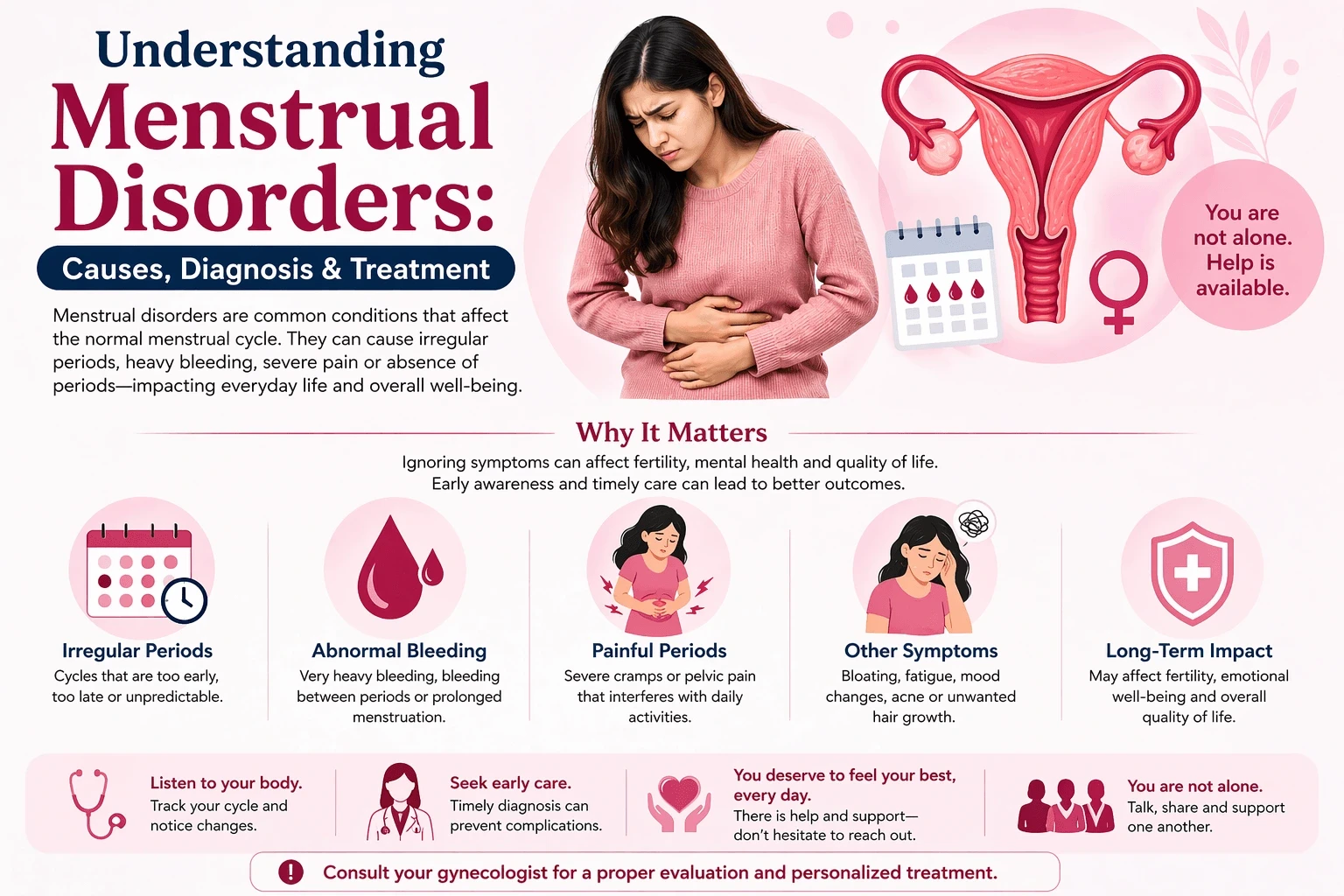
No two women experience their menstrual cycle in exactly the same way, and a fair amount of natural variation is completely normal. But there's a meaningful difference between a cycle that's simply "different" and one that signals an underlying disorder worth investigating. This guide breaks down the most common menstrual disorders, what typically causes them, and when it's time to see a doctor.
What Counts as a "Normal" Cycle?
A typical menstrual cycle ranges from 21 to 35 days, with bleeding lasting between 2 and 7 days. Some month-to-month variation is expected, especially in the years right after your first period and in the lead-up to menopause. Outside of these transitional periods, however, significant or persistent irregularity is usually worth discussing with a doctor.
Common Menstrual Disorders
1. Irregular Periods (Oligomenorrhea)
Cycles that are consistently longer than 35 days, or unpredictable from month to month, often point to hormonal imbalances such as PCOS, thyroid dysfunction, or significant stress and weight changes.
2. Heavy Menstrual Bleeding (Menorrhagia)
Bleeding heavy enough to soak through a pad or tampon every hour for several consecutive hours, passing large clots, or periods lasting longer than seven days.
Common causes: uterine fibroids, polyps, hormonal imbalances, thyroid disorders, or, less commonly, underlying bleeding disorders.
3. Absent Periods (Amenorrhea)
The absence of periods for three or more consecutive months in someone who previously had regular cycles (excluding pregnancy) is classified as secondary amenorrhea.
Common causes: significant weight changes, excessive exercise, high stress levels, PCOS, thyroid disorders, or premature ovarian changes.
4. Painful Periods (Dysmenorrhea)
Mild cramping is common, but pain severe enough to interfere with daily activities — missing school, work, or normal function — is not something to simply tolerate.
Common causes: primary dysmenorrhea (cramping without an underlying condition) or secondary dysmenorrhea linked to conditions like endometriosis or fibroids.
5. Premenstrual Syndrome (PMS) and PMDD
Mood changes, bloating, and breast tenderness before a period are common (PMS), but Premenstrual Dysphoric Disorder (PMDD) involves more severe emotional symptoms — significant irritability, anxiety, or depression — that meaningfully disrupt daily functioning in the days before a period.
6. Intermenstrual Bleeding
Bleeding or spotting between periods can have several causes, ranging from hormonal fluctuations and ovulation spotting to polyps, infections, or, in some cases, more significant underlying conditions that require evaluation.
What Causes Menstrual Disorders?
Hormonal imbalances, including PCOS and thyroid disorders
Structural conditions, such as fibroids or polyps
Stress and significant lifestyle changes, including major weight fluctuations or intense exercise
Perimenopause, as hormone levels naturally shift in the years leading up to menopause
Certain medications, including some contraceptives and blood thinners
Underlying medical conditions, such as bleeding disorders or pelvic infections
When to See a Doctor
See a gynecologist if you experience:
Periods consistently shorter than 21 days or longer than 35 days
Bleeding lasting longer than 7 days
Soaking through a pad or tampon every hour for several hours
Missing periods for three months or more (when not pregnant)
Pain severe enough to disrupt daily activities
Bleeding between periods or after intercourse
Any bleeding after menopause
How Menstrual Disorders Are Diagnosed
Detailed menstrual and symptom history
Physical and pelvic examination
Blood tests, to check hormone levels, thyroid function, and rule out anemia
Ultrasound, to check for fibroids, polyps, or ovarian abnormalities
Occasionally, further procedures such as a hysteroscopy, if initial findings suggest a need for closer examination
Treatment Approaches
Treatment depends entirely on the underlying cause:
Hormonal therapy, including birth control, to regulate cycles and reduce heavy bleeding or pain
Iron supplementation, if heavy bleeding has led to anemia
Medication for pain management, tailored to the severity and cause of pain
Treatment of underlying conditions, such as thyroid management or fibroid treatment
Lifestyle adjustments, including stress management and nutritional support, particularly for stress- or weight-related irregularities
Frequently Asked Questions
1. Is it normal for my cycle length to change slightly each month?
Yes, minor variation of a few days is common and not usually a cause for concern, especially in the absence of other symptoms.
2. Can stress really affect my period that much?
Yes. Significant stress can disrupt the hormonal signals that regulate ovulation and menstruation, sometimes delaying or even stopping periods temporarily.
3. How much bleeding is considered "too heavy"?
As a general guide, needing to change a pad or tampon every hour for several consecutive hours, or passing clots larger than a coin, are signs of heavy bleeding worth discussing with your doctor.
4. Are period pain and PMS the same thing?
No. Period pain (dysmenorrhea) refers to physical cramping during menstruation, while PMS refers to a broader range of physical and emotional symptoms that occur before a period begins.
5. Can menstrual disorders affect my fertility?
Some underlying causes of menstrual disorders, such as PCOS or endometriosis, can affect fertility, which is another reason timely evaluation matters, especially if you're planning a future pregnancy.
6. Do I need to track my cycle before seeing a doctor?
It's very helpful. Even a simple record of cycle length, bleeding duration, and symptoms over two to three months can give your doctor valuable information for diagnosis.
Conclusion
Menstrual irregularities are common, but "common" doesn't always mean "nothing to worry about." Understanding what's typical for your own body — and recognizing when a pattern shifts outside that range — is one of the most useful things you can do for your long-term reproductive health.
Get Your Menstrual Health Evaluated
If your cycle has changed, or period pain and bleeding feel harder to manage than they should, the gynecology team at Chaitanya Hospital, Kadapa is here to help identify the cause and find real relief. Book an appointment today to get started.
Have Questions?
Our medical team at Chaitanya Hospital is here to help. Book an appointment to discuss your questions with a doctor.

